Island Diplomacy
Why the SIDS
Special Case?
Small island states are recognised as a special case for sustainable development. What that recognition rests on, what it is for, and the evidence behind it.
People in small islands are feeling the impacts of global challenges earlier, harder and with fewer resources to respond than nations elsewhere.
The United Nations recognises Small Island Developing States (SIDS) as a "special case" for sustainable development. That recognition reflects real pressures on island communities, from rising seas and extreme weather to economic shocks, high costs and persistent inequality. But SIDS are not only on the frontline of these challenges. They are leading on solutions, offering ideas and approaches that can help build a more resilient future for everyone.
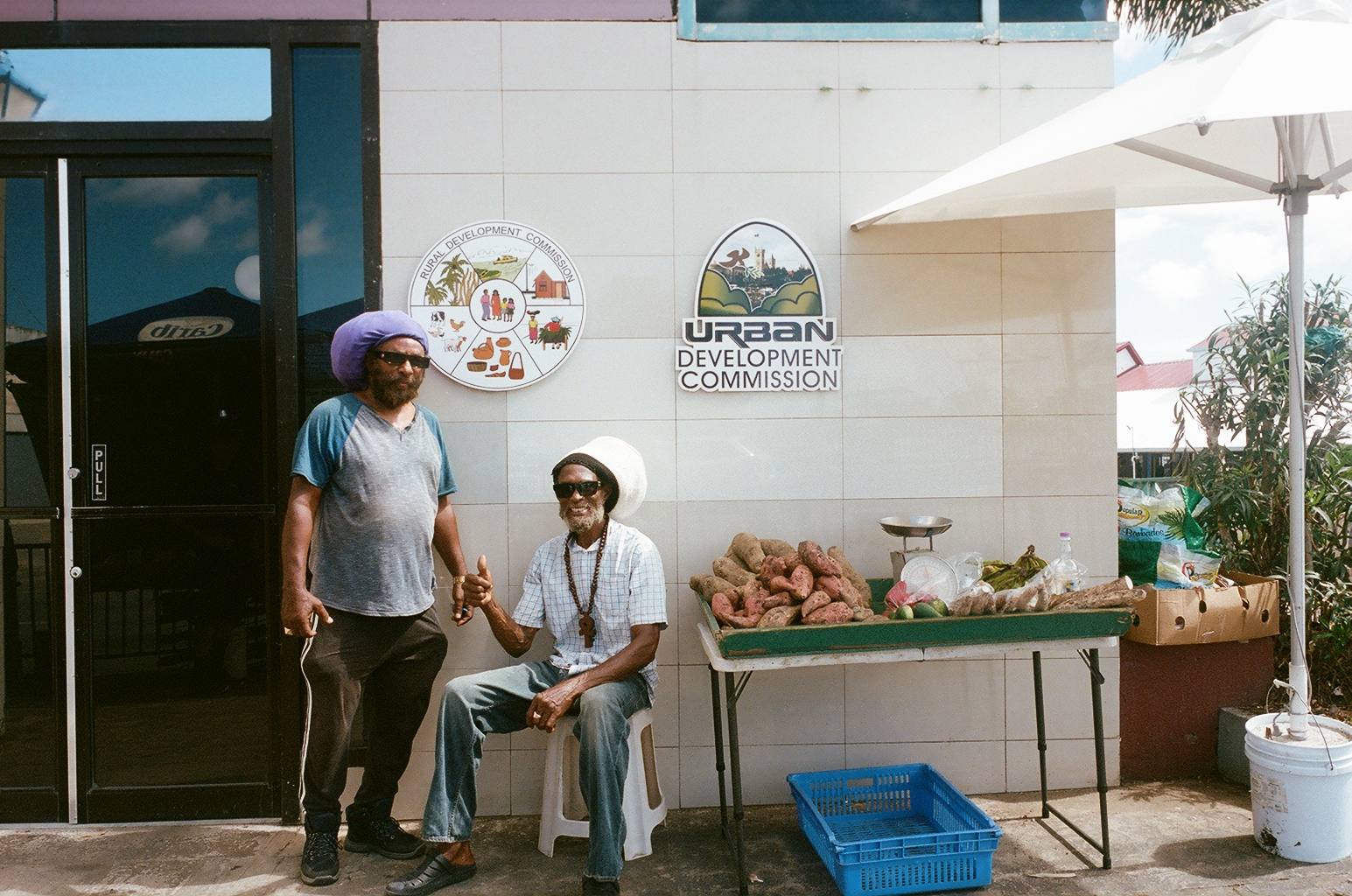
Distinctive challenges, distinctive strengths
SIDS are a group of 39 UN member states and 18 associate members across the Caribbean, the Pacific, and the Atlantic, Indian Ocean and South China Sea (AIS) regions.
Most of the challenges facing small islands do not originate in SIDS, are not unique to SIDS, and are not of SIDS' own making. They are global problems that require global solutions.
The international community recognises SIDS as a special case for sustainable development. This means action is needed at every level to counter the vulnerabilities small islands face and strengthen their resilience. It means international systems, finance and partnerships must respond to those realities and support the futures SIDS want to build for themselves.
SIDS are diverse in geography, culture, history and economic structure. What they share is a set of structural characteristics that make sustainable development more complex and more costly.
Small populations and limited domestic markets constrain economies of scale. Remoteness raises the cost of trade, energy, infrastructure and essential goods and services. Economic activity is often concentrated in a few sectors, leaving countries exposed to external shocks. For many SIDS, these realities now intersect with the growing impacts of climate change: rising seas, coastal erosion, extreme weather and changing ocean conditions.
These pressures are familiar around the world. What sets SIDS apart is how they combine and compound within small economies and societies. A single climate disaster can hit homes, infrastructure, public finances, livelihoods and key economic sectors at once. The capacity to respond and recover is constrained precisely when the need for investment is greatest.
SIDS are not defined by these challenges. Across the small island world, governments, communities, businesses and civil society are developing new approaches to resilience, environmental stewardship, renewable energy, public services and economic development. SIDS have led global efforts on climate change, oceans and sustainable development, bringing perspectives and expertise that matter far beyond their shores.
What is the SIDS special case?
The SIDS special case is the international recognition that the circumstances of small island states require development approaches built around their realities.
Its foundations lie in the 1992 Rio Earth Summit, where the United Nations recognised in Agenda 21 that Small Island Developing States were a "special case both for environment and development". That recognition reflected the particular combination of small size, limited resources, geographic dispersion, remoteness and exposure to environmental and economic shocks that shapes development in SIDS.
The 1994 Barbados Programme of Action gave the principle practical form. It was the first international programme dedicated to the sustainable development of SIDS, and it set out a framework for cooperation on climate change, natural disasters, energy, water, biodiversity, tourism, infrastructure and human development.
The framework has since evolved through the Mauritius Strategy, the SAMOA Pathway and, most recently, the Antigua and Barbuda Agenda for SIDS (ABAS) 2024–2034. Priorities have shifted. The underlying principle has not: development policy and international cooperation need to reflect the structural realities of SIDS rather than assume one model works equally well everywhere.
Why does the special case matter?
Recognition alone is not enough. The question is whether international systems of development finance, investment, measurement and cooperation actually reflect the circumstances they claim to recognise.
Traditional measures such as income per person tell only part of the story. They miss the added cost of delivering services across dispersed islands, the economic consequences of remoteness, exposure to external shocks and the fiscal strain of repeated disasters. Countries can look relatively prosperous on headline indicators while facing serious structural constraints on their development.
This matters for people. It affects the resources available to run schools and hospitals, build resilient infrastructure, create economic opportunity, respond to disasters and invest in the future. It affects the choices open to governments as they try to deliver development on their own terms.
For RESI, defending the special case means keeping those realities, and the people behind them, at the centre of international decision-making. It means recognising the constraints SIDS face without reducing countries or communities to those constraints. And it means giving equal weight to the capabilities, knowledge, leadership and ambition found across the small island world.
The special case is not simply a case for more support. It is a case for development approaches that reflect where people live, the circumstances in which countries operate, and the futures they want to build.
The most comprehensive evidence base to date
The State of SIDS Report 2026: Defending the Special Case is RESI's flagship report. It brings together evidence across small island economies, societies, infrastructure, environment and climate adaptation. It argues that the special case remains as relevant as ever, and must be translated into more effective international cooperation, financing and institutions that reflect the realities and priorities of SIDS.
The perspectives of small island governments
Action on sustainable development must start with listening to the governments and communities living with these realities every day. Their perspectives matter in defining the challenges and in shaping the solutions, including what effective partnerships, finance and international cooperation should look like. RESI brings these perspectives into its research and convening, creating space for SIDS leaders to set the agenda and share their priorities.
The SIDS Future Forum
RESI convenes this forum every two years for small island leaders driving progress on the Antigua and Barbuda Agenda for SIDS (ABAS) and climate action. The latest forum was held in January 2026 at Wilton Park, in partnership with the Foreign, Commonwealth and Development Office (FCDO).
How Small Island Developing States view their development partners
As climate pressures grow, small islands are reassessing the partners, financing models and governance systems that shape their development. Drawing on RESI's first SIDS Perceptions Survey, this analysis finds China to be the most valued bilateral partner, a signal of shifting geopolitics and a critical insight for development partners seeking long-term impact in small islands.
Further listening from RESI